

 Nora Marziale
  Maryline Mattè
  Carmen R. Cruz
  Samuel Delvaux
  Maryline Mattè / Samuel Delvaux
  Michelle Scappa
  Maya Dubuisson
  Amélie Lamarche
  Sophie Ista
  Stéphanie Liégeois
  Maud Brambach
  Maud Brambach - L. Dall'Amico
  Ines Verboogen
  Jodie Vangenechten
 Maryline Mattè
Samuel Delvaux
Michèle Swennen
Maud Brambach
Carmen R. Cruz
Michelle Scappa
Sophie Ista
Maya Dubuisson
Stéphanie Liegeois
Luca Dall'Amico
Ines Verboogen
Nora Marziale
Jodie Vangenechten
Amélie Lamarche
Charlotte Ravone
Maryline Mattè
 Maryline Mattè started dancing at the age of 6. At 11, she began dancing more and more hours and dance literally became her passion. From her teenage years, she went every year to international workshops which were extremely enriching and opened the way to contemporary dance for her, in addition to deepening other disciplines. At 20, she began physical training at the Royal Conservatory of Dramatic Art of Liège as a free student. She took the opportunity to attend several theatre workshops that showed her the art of the stage from a different angle. At 21, she took on a series of small dance jobs to get stage experience and spent two seasons at the Trianon with some dancers from the Opéra Royal de Wallonie.
In 2002, she landed the role of Anita in the musical “West Side Story” at the Cirque Royal in Brussels (dance and theatre adaptation).
That same year, she went to Paris to complete her training in classical, jazz and contemporary dance and soon began teaching at the Conservatoire Régional de Sens.
In 2003, the director of the conservatories of the 4 departments of Burgundy offered her the head of the jazz department at the Conservatoire National d’Auxerre. She taught there until her departure in 2005.
In 2004, she landed a role in a contemporary creation in Paris, with Valérie Scannella’s company, while continuing her theatre training at the Sens conservatory.
The following year, her teacher in Paris, Valérie Scannella (a former dancer with the Nancy ballet), entrusted her classes to her at Studio Harmonic.
Back in Belgium at the end of 2005, she had to start almost from scratch.
She began working occasionally at the Opéra Royal de Wallonie, notably in Faust and Nabucco, but her interests increasingly led her toward teaching, which she found more fulfilling than anything else.
In 2011, she began training in the Gasquet method in “Abdos Autrement” and “Stretch-yoga” and deepened her knowledge of the Postural-Respiratory Approach with Sandro Zatta.
At PATIO, Maryline teaches classical and contemporary dance, jazz technique, as well as barre à terre and Core-Yoga classes.
Samuel Delvaux
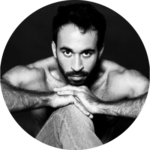
Born on 23 October 1984 in Belgium, Samuel Delvaux received multidisciplinary training at various private schools in Liège, Namur and Brussels.
He refined his training with the young dancers’ company “Passerelles 03” based in Brussels, then a year later joined the “ITDansa” company in Barcelona, where he worked for two years.
Samuel then went on to work as a soloist in various state theatres across Europe, dancing the works of world-renowned choreographers including Jiří Kylián, Wim Vandekeybus, Peter Zuska, Nacho Duato, Jochen Heckmann and Ohad Naharin.
From 2009, he began working as a freelance dancer and collaborated with around ten contemporary companies such as Gelabert-Azzopardi in Barcelona, Philipp Egli in Zurich, Michel Kelemenis in Marseille, Sylvain Groud in Paris, as well as with European theatres such as the Opéra Comique in Paris, the Théâtre National de Catalunya and the Staatstheater Linz in Austria, to name just a few.
Always in search of new experiences and discoveries, he also danced in more unusual venues such as museums like the Neues Museum Nürnberg, La Boverie in Liège, for visual artist Bongsu Park at the Rosenfeld-Porcini Gallery in London, or during an immersive virtual reality experience set up by the Japanese avant-garde art collective GrinderMan, on the occasion of the Ars Electronica festival in Austria.
He has also been asked to represent brands at commercial events, including Thomson, Swiss Textile, BMW, Formula E, Lycra, the Swiss private bank Julius Baër, and Ici Paris XL, and to accompany singers such as Leona Lewis, Hurts, Loreen and Seven on international tours.
He danced in the musicals Hairspray, Cabaret and Kiss Me Kate and later took part in major variety show productions such as Art On Ice, Himmel Auf Herden and True Colors, performing more than 120 dates in European stadiums such as the HallenStadion in Zurich and the legendary Ericsson Globe in Stockholm. On these occasions, he collaborated several times with Canadian choreographer Sean Cheesman, who has worked with stars such as Janet Jackson, Britney Spears, Prince and Tina Turner.
Samuel Delvaux has also choreographed several times for the Junior Ballet Prague, the Tanztheater Nürnberg and the South Bohemian Ballet. He has won several awards for his creations, including that of best young choreographer at the Madrid International Choreography Competition.
He has also worked as assistant choreographer on televised shows, such as the opening ceremony of the Alpine Skiing World Championships in St Moritz, Switzerland.
Since 2013, Samuel Delvaux has been recognised as a dance teacher by the Fédération Wallonie-Bruxelles. He teaches at private schools in Belgium and during workshops and masterclasses abroad, such as at the Dance Center Prague and the Schwaben Academy in Germany.
Michèle Swennen
 At the age of five, Michèle Swennen began her training in Brussels with Jaques-Dalcroze eurhythmics. She trained in contemporary dance with Renate Peter and in classical dance with Marina Van Hoeck. In Paris, she studied the Limon technique with Peter Goss, Betty Jones & Fritz Luddin, in New York with Jennifer Muller and Luis Falco, as well as the Graham technique with Michel Nourkil.
In 1985, upon her return from the US, she founded her company and the first contemporary dance centre in Brussels: “Flagrant Délit”. Within this framework, she developed her work as a choreographer and teacher.
Drawing on her stage expertise, she has choreographed for opera and coached actors, dancers, circus performers and musicians.
For many years, her reputation as a teacher of the Limon technique has led her to teach all over the world, within the framework of several professional companies and at dance colleges and universities as a guest or appointed teacher.
At the Brussels Conservatory of Music, she teaches body awareness for musicians and posture at the instrument. She also teaches anatomy to dancers, dance teachers and actors.
Michèle teaches the teacher-training programmes at PATIO.
Maud Brambach
 Trained at the Académie Grétry and then at the dance-focused secondary school in Liège, Maud Brambach went on to graduate from the Northern School of Contemporary Dance in Leeds, England.
A professional dancer in numerous opera, operetta, musical, revue and contemporary productions, she has danced notably in Italy, England and regularly with the Opéra Royal de Wallonie in Belgium.
She has been teaching classical dance and PBT for more than 8 years.
Carmen R. Cruz
 Carmen R. CRUZ is a committed choreographic artist and teacher, whose career is marked by a great diversity of training and physical practices.
Trained at several reference centres in Europe, she is a graduate of the École Nationale Supérieure de Danse de Marseille, the Conservatoire National de Danse in Pantin (Paris), and holds a Master’s degree in contemporary dance. She has also completed additional training in rhythmic pedagogy at the Institut Jaques-Dalcroze (Brussels), in circus arts at Espace Catastrophe, and in choreographic creation at Danscentrumjette with Roxane Huilmand.
She has enriched her artistic approach through contact with international choreographers such as Martin Kilvady, Bruno Caverna, Peeping Tom, Frey Faust and Rodrigo García, developing an approach to movement that is sensitive, intuitive and deeply embodied.
She is currently completing the teaching unit of the French State Diploma in contemporary dance, and has also completed the first three modules of the teacher-training programme at PATIO – House of Dance, where she continues to reflect on the transmission of movement, listening and creativity.
Michelle Scappa
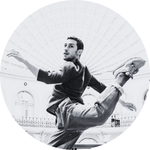 Michelle Scappa is an Italian dancer, choreographer and performer active on the European contemporary dance scene. Trained at the Dance Arts Faculty (DAF), at Opus Ballet, and then at the prestigious VERVE Master’s programme at the Northern School of Contemporary Dance (United Kingdom), from which he graduated with distinction, he has developed a sensitive, physical and engaged choreographic language.
As a choreographer, his works include There is a Planet (2023), selected for the Vetrina della giovane danza d’autore, and Papillon (2025), a solo he performs himself, which has been presented at numerous international festivals in both Italy and China.
Alongside his creative work, Michelle collaborates as a performer with several renowned companies and choreographers, including Sofia Nappi, Kinkaleri, Luna Cenere, Gruppo Nanou, Company Blu, Saeed Hani, Francesca Banchelli, L-square Performance and Mobius Dance.
At PATIO, he occasionally teaches to share his approach to contemporary dance, shaped by an international career combining creation, performance and choreographic research.
Sophie Ista

Sophie Ista is a passionate and experienced dancer, with in-depth training in classical dance, which she practised intensively for 13 years at the École Martine Wolf in Liège. Her journey in dance allowed her to develop an intimate understanding of her body and a particular sensitivity to emotional expression through movement. After a career in healthcare, Sophie brought dance back into her professional practice, using dance movement to help people better perceive their bodily sensations and encourage authentic self-expression. Trained in Anna Halprin’s Life Art Process, in dance and expressiveness, as well as in the Perceptive Pedagogy of the Danis Bois method, she incorporates dance as a profound body language, connecting body and mind in a quest for harmony and well-being. Sophie joined the PATIO – House of Dance team during the 2024-2025 season.
Maya Dubuisson
 From the start, Maya Dubuisson oriented her practice toward jazz dance. After completing secondary school and training at the conservatory, she refined her skills in the Graham technique at the Cologne Academy of Fine Arts, at the invitation of Paul Haze, whose assistant for FEDES she later became.
She teaches at various organisations in Wallonia and Brussels, notably at Choreart, Les Papeteries, JBN and AKDT. At the same time, her interest in contemporary dance led her to deepen her artistic research through the training programme of Plan K and P.A.R.T.S.
Spotted during an improvisation workshop led by Athina Vahla, she was subsequently appointed head of the contemporary dance department of ARBA (secondary arts education).
Trained in choreology for five years by Rose Mary Brandt and holder of a teaching aptitude certificate, Maya Dubuisson places the transmission of knowledge at the heart of her professional path. This is an essential driving force behind her approach and feeds an ongoing reflection on movement and teaching.
Stéphanie Liegeois
 Trained from a young age at the Académie Grétry, Stéphanie completed her studies with dance-focused secondary school, classical option. She continued her training at the Ballet Junior de Genève school while taking part in international workshops (Neufchâteau, Biarritz).
After choosing to study speech therapy, Stéphanie continued dancing out of passion and took part in numerous performances with the Jeune Ballet de Liège under the direction of Edith Quignon for several years.
In 2023, she returned to the dance studio floor when Le Patio opened. After a few stand-in classes at the House of Dance, Stéphanie joined the teaching team and will teach classical dance for the 2026-2027 season. She wants to share her passion with rigour and pass on the joy of dancing to new generations of dancers.
A mother of three young girls and very interested in the well-being of young children and families, Stéphanie offers Baby Sign workshops to support communication with babies. She will soon be organising dance sessions for parents and their babies at Le Patio.
Luca Dall'Amico

Luca Dall’Amico is an internationally renowned Italian bass, regarded as one of the most remarkable voices of his generation. Trained with distinction in trombone, organ, composition and singing, he has built an exceptional career on the world’s greatest opera stages, including La Scala in Milan, the Teatro dell’Opera in Rome, the Salzburg Festival, the Opéra Royal de Wallonie, the Teatro Real in Madrid and the Chicago Symphony Orchestra.
Since 2009, he has maintained a close collaboration with the famous conductor Riccardo Muti, with whom he has performed numerous major works from the Italian repertoire. His career has led him to take on the great bass roles in the operas of Mozart, Rossini, Bellini, Donizetti, Verdi, Puccini and Gounod, while collaborating with some of the most prestigious conductors and directors in the opera world.
Drawing on this rich artistic and pedagogical experience, Luca occasionally teaches alongside Maud Brambach in the musical theatre class. There, he shares his expertise in singing, vocal technique and stage performance, offering students a valuable perspective from a career carried out at the highest international level.
Ines Verboogen

Inès Verboogen is a Pilates and yoga teacher. Always passionate about movement and well-being in all its forms, she practises various body disciplines, including dance, which she considers highly complementary to Pilates and yoga.
Trained in the STOTT PILATES method (Matwork and Reformer), Inès takes a contemporary approach to Pilates. This method emphasises alignment, precision and breathing, for work that is both deep and respectful of the body.
She has also completed a 200-hour yoga teacher training (YTT) as well as a 50-hour Yin Yoga training, both recognised by Yoga Alliance. Her yoga teaching is fluid and introspective. She incorporates practices such as breathing, meditation and mindfulness, inviting everyone to reconnect with themselves and deepen their presence.
Inès teaches with care and availability. She continues to train regularly in order to nourish her practice, broaden her resources and offer ever more attentive and lively guidance.
For her, body awareness is much more than a tool for posture: it is a genuine path of self-knowledge, a gateway to a deeper, calmer and more vibrant relationship with one’s own body — a way to fully embody one’s essence.
Inès teaches a Pilates Mat class and yoga at PATIO.
.
Nora Marziale
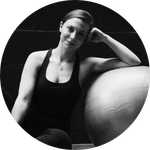
Passionate about movement and well-being, Nora Marziale has placed sport at the heart of her daily life for many years. Running and Pilates have developed her rigour, discipline and body awareness.
Driven by a strong interest in anatomy and how the human body works, she trained in Brussels in 2025 with Balanced Body to become a Pilates Mat teacher. She particularly values the accessible and progressive approach of Pilates, which allows everyone to progress at their own pace, regardless of level or goals.
Through her classes, Nora aims to pass on a caring, effective and sustainable practice, within an overall vision of movement and well-being.
Jodie Vangenechten
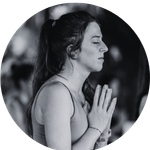 Jodie Vangenechten is a yoga teacher. She has practised dynamic yoga, mainly ashtanga and vinyasa, for five years, and trained with Yoga Union Bali (200h in October 2024, 300h in October 2025). She has been teaching for a little over a year.
She loves movement and all methods that help bring people back to the body and presence. Each class is built around a theme or intention and unfolds progressively, with variations so that everyone finds their own path: challenge, grounding, or simply the comfort of the moment.
Her vinyasa classes alternate dynamic sequences with calmer moments, an invitation to explore
Amélie Lamarche
Amélie Lamarche trained for more than ten years in
classical dance alongside Maud Brambach. She then
broadened her practice to contemporary dance, jazz and
funk/hip-hop styles. She also experimented with barre à terre and
musical theatre, developing a versatile approach
to movement.
For two years, she assisted Maud in classes
for the youngest children, which gave her a first structured
teaching experience. She holds the youth group leader certificate
recognised by the Fédération Wallonie-Bruxelles.
Amélie now runs the early years dance classes at PATIO, under the
supervision of Samuel Delvaux.
Charlotte Ravone
Charlotte Ravone is a young, talented dancer, trained in various dance styles from an early age. Since the age of 9, she has been closely guided in classical and contemporary dance by Samuel Delvaux, who has greatly contributed to her artistic development.
Thanks to her rigorous work and sensitivity, Charlotte has distinguished herself in several competitions. She notably won first prize in the final of the Belgian Championship Dancewave in 2022, as well as second place in the Arabesque competition in 2020 and third place in 2022. In 2025, she continues her competitive journey, notably at the Dance Waves Competition, alongside other PATIO dancers.
She is currently training in dance pedagogy at PATIO, under the guidance of Michèle Swennen. She regularly assists during workshops, sharing her experience with care and professionalism.
Classical dance
Contemporary dance
Modern Jazz
Somatic techniques
Classical dance
Danse Classique
Pointes
Danse Classique
La danse classique est une discipline technique et codifiée, caractérisée par des mouvements précis, gracieux et élégants, avec une attention particulière à la rotation des jambes vers l’extérieur (en-dehors) et au travail des pieds. Elle exige rigueur et discipline, développant force musculaire, équilibre, souplesse et grâce. Les cours commencent par des exercices à la barre pour apprendre et perfectionner les mouvements, suivis de travail au milieu pour enchaîner les mouvements et se déplacer dans l’espace. La danse classique favorise la concentration, la coordination, une posture élégante, et développe un bien-être physique et psychologique.

Pointes
Le cours de pointes en danse classique est conçu pour perfectionner la technique des danseurs sur pointes, en se concentrant sur plusieurs aspects essentiels. Les objectifs principaux du cours sont de renforcer les muscles des pieds et des chevilles, améliorer l’équilibre et la stabilité, affiner la technique classique et développer l’expression artistique des danseurs.
Ce cours s’adresse aux danseurs ayant une bonne base en technique classique sur demi-pointes. Nous recommandons d’obtenir l’accord du professeur avant de commencer les cours de pointes, pour s’assurer que les muscles et les articulations sont suffisamment préparés pour cette pratique intensive.

Contemporary dance
Danse Contemporaine
DUO
Atelier contemporain
Danse Contemporaine
Apparue dans les années 1960-70 aux États-Unis et en Allemagne, la danse contemporaine se distingue par sa rupture avec les autres formes de danse. Elle fusionne divers courants artistiques, créant des œuvres hybrides et innovantes. Les chorégraphes cherchent à surprendre et émouvoir, tout en transmettant des messages. La danse contemporaine intègre différents notions de danse (classique, moderne, hip-hop) et encourage les élèves à développer leur propre style. Les cours combinent étirements, travail technique au milieu, enchaînements et sauts, mêlant technique, création et expression personnelle.

DUO
Le cours de DUO une fusion innovante entre la danse contact et le partnering, deux styles de danse contemporaine qui explorent la relation physique et émotionnelle entre les danseurs.
La danse contact, parfois appelée “contact improvisation”, est une forme de danse où les danseurs entrent en contact physique direct avec leur partenaire de manière fluide et improvisée. Elle met l’accent sur l’écoute, la sensibilité et la réactivité entre les danseurs. Dans la danse contact, il n’y a pas de chorégraphie préétablie ; au lieu de cela, les mouvements émergent spontanément en réponse aux impulsions, aux poids et aux interactions avec le partenaire et l’environnement. Les danseurs peuvent échanger des poids, se pousser, se tirer, rouler ou simplement se soutenir mutuellement dans des moments d’équilibre et de déséquilibre. La danse contact encourage une exploration ludique du mouvement et de la relation avec l’autre, souvent dans un esprit de collaboration et de confiance mutuelle.
Le partnering en danse contemporaine, en revanche, implique généralement une chorégraphie préétablie où les danseurs travaillent ensemble pour créer des séquences de mouvements synchronisés. Contrairement à la danse contact, où l’improvisation est au cœur de la pratique, le partnering repose sur des techniques spécifiques de levage, de soutien et de connexion physique pour réaliser des mouvements chorégraphiés avec précision et fluidité. Les partenaires peuvent exécuter des éléments acrobatiques, des portés, des élévations et des figures qui mettent en valeur leur force, leur équilibre et leur coordination. Le partnering peut également impliquer des interactions émotionnelles et narratives, où les danseurs expriment des sentiments ou des histoires à travers leur mouvement en duo.
Bien que la danse contact et le partnering aient des approches distinctes, ils partagent tous deux un engagement profond envers la connexion humaine et l’expression corporelle authentique, enrichissant ainsi le paysage diversifié de la danse contemporaine.
Dans ce cours, les participants ne sont pas tenus de venir accompagnés, car les duos seront formés sur place en studio. Chaque semaine, les duos seront réorganisés, offrant ainsi aux danseurs l’opportunité d’explorer de nouvelles dynamiques de partenariat et d’enrichir leur expérience avec différents partenaires.

Atelier contemporain
Cet atelier de danse contemporaine est animé par une équipe diversifiée et expérimentée de professeurs : Samuel Delvaux, Louis Combeaud, Pierre Bastin et Michèle Swennen…
Le but de ce cours est d’offrir une immersion dans différentes techniques et visions de la danse contemporaine, reflétant la richesse et la diversité de cette forme artistique.

Modern Jazz
Danse Moderne-Jazz
Danse Moderne-Jazz
Le Modern Jazz est une danse née au milieu du XXe siècle, issue de la fusion entre les danses africaines et européennes. Cette danse est caractérisée par une grande liberté de mouvement, un accent sur le rythme, et une expression émotionnelle variée. Elle utilise tout le corps avec des mouvements fluides et proches du sol, tout en étant technique et codifiée. Popularisée par des pionniers comme Katherine Dunham et Jack Cole, elle se pratique aujourd’hui sur des musiques contemporaines et est souvent associée au hip-hop. Les danseurs de modern jazz apprennent l’importance des isolations, qui consistent à bouger une partie du corps tout en maintenant le reste immobile. Les mouvements fondamentaux incluent les pliés, les tendus et les extensions, développant la flexibilité et la force nécessaires pour exécuter des mouvements complexes.

Somatic techniques
PBT
Core-yoga
Barre à terre
PILATES
MOUVEMENT SENSORIEL
YOGA YING-YANG
YOGA VYNIASA
Inside Flow Yoga
PBT
Le Progressing Ballet Technique (PBT) est un programme innovant de renforcement et de conditionnement corporel conçu pour améliorer la mémoire musculaire. Ce système d’entraînement unique utilise des exercices spécifiques à la technique du ballet.
Le PBT aide à prévenir les blessures, favorise la rééducation et améliore les performances des athlètes. Grâce à l’utilisation d’un ballon d’exercice, les élèves acquièrent une meilleure posture et une répartition du poids correcte, ressentant ainsi les bons groupes musculaires travaillant dans chaque exercice.
Le programme met l’accent sur la force du tronc, le placement du poids et l’alignement corporel grâce à des exercices conçus pour déclencher la mémoire musculaire. En suivant une méthodologie de danse sécurisée, le PBT promeut un entrainement physique long et sain. Plus de 4000 enseignants certifiés et plus de 3500 écoles dans le monde ont intégré les cours de PBT dans leur programme.
Le PBT n’améliore pas seulement la technique des danseurs de ballet, mais est également apprécié et intégré par le grand public, des athlètes, des physiothérapeutes et même des footballeurs.

Core-yoga
Le cours de Core-Yoga est une fusion innovante de yoga et de travail de renforcement du centre, conçu pour améliorer votre force, votre flexibilité et votre équilibre global.
Le Core-Yoga combine les postures traditionnelles du yoga avec des exercices ciblés de renforcement musculaire, en mettant un accent particulier sur le centre du corps, ou “core”. Ce cours vise à développer une ceinture abdominale solide et à stabiliser la colonne vertébrale, tout en intégrant les principes de respiration et de relaxation propres au yoga.
Durant chaque séance, vous serez guidé à travers une série de postures de yoga qui étirent et assouplissent les muscles, tout en travaillant l’alignement et la concentration. Ces postures sont entrecoupées d’exercices de renforcement. En combinant ces éléments, le Core-Yoga permet non seulement de tonifier et de sculpter le corps, mais aussi de renforcer la stabilité et la posture.
Le cours de Core-Yoga est accessible à tous les niveaux de pratique, des débutants aux pratiquants avancés. Chaque mouvement est adaptable en fonction des capacités individuelles, permettant à chacun de progresser à son propre rythme. Les bénéfices incluent une meilleure posture, une diminution des douleurs dorsales, une augmentation de la force fonctionnelle et une amélioration de la flexibilité et de la coordination.

Barre à terre
La barre à terre est une méthode d’entraînement physique inspirée des exercices de barre classique en danse, mais pratiquée au sol. Cette approche combine les principes de la danse classique avec des techniques de renforcement musculaire et de flexibilité, tout en minimisant les contraintes sur les articulations et la colonne vertébrale.
Le cours de barre à terre se déroule entièrement sur le sol, ce qui permet d’éviter les risques de blessures liés à la gravité et aux impacts répétitifs. En s’allongeant, en s’asseyant ou en se mettant à genoux, les pratiquants peuvent exécuter des mouvements de danse qui ciblent spécifiquement les muscles profonds, améliorant ainsi la posture, la stabilité et la force globale.
La barre à terre est adaptée à tous les niveaux de condition physique et ne nécessite aucune expérience préalable en danse. Elle est idéale pour les personnes cherchant à renforcer leur corps de manière équilibrée, à améliorer leur flexibilité et à développer une meilleure posture.
En intégrant la barre à terre dans votre routine d’entraînement, vous bénéficierez d’une méthode complète et efficace pour tonifier votre corps, tout en favorisant la relaxation et la conscience corporelle. Rejoignez-nous pour découvrir les bienfaits de cette pratique unique qui allie la grâce de la danse classique à la rigueur du renforcement musculaire au sol.

PILATES
Le Pilates est une méthode de conditionnement physique développée par Joseph Pilates au début du XXe siècle. Cette pratique se concentre sur le renforcement des muscles profonds, particulièrement ceux du tronc (abdominaux, muscles du dos et plancher pelvien), pour améliorer la posture, la flexibilité et l’équilibre. Le Pilates met l’accent sur la respiration contrôlée, la précision des mouvements et l’alignement du corps, utilisant des exercices au sol ou sur des appareils spécifiques comme le Reformer. C’est une discipline accessible à tous les niveaux de forme physique, favorisant une meilleure conscience corporelle et une santé globale.

MOUVEMENT SENSORIEL
Bouger, Danser, Être – Gymnastique sensorielle & mouvement dansé pour tous
Ce cours propose une pratique corporelle accessible à tous, basée sur la gymnastique sensorielle, une approche issue de la fasciathérapie méthode Danis Bois.
Par des mouvements simples, lents, souvent guidés, parfois dansés, vous êtes invités à porter attention à votre ressenti, à explorer des parties du corps peu mobilisées ou oubliées, à redécouvrir le plaisir de bouger en conscience.
Ce que vous allez pratiquer :
- Des mouvements doux, précis et inhabituels, réalisés en lenteur, pour éveiller la perception des zones corporelles peu conscientes.
- Des temps de danse libre et guidée, pour laisser émerger votre mouvement naturel, sans enjeu de performance.
- Des moments d’introspection en mouvement, pour calmer le mental et revenir à soi.
- Des exercices ludiques qui sollicitent la mémoire, la coordination, l’équilibre et la concentration.
- Une observation fine de vos schémas corporels et mentaux, pour apprendre à les reconnaître… et les transformer.
- Un travail de reconnexion corps-esprit : apprendre à nommer vos sensations, affiner votre langage intérieur, mieux habiter votre corps.
- Une invitation au plaisir du mouvement, à la joie simple d’exister pleinement, ici et maintenant.
À qui s’adresse ce cours ?
À toute personne souhaitant bouger autrement, prendre soin de soi, retrouver un lien profond avec son corps, sans avoir besoin d’être danseur ou sportif.
Un espace bienveillant, respectueux du rythme de chacun, pour ralentir, respirer, sentir, bouger… et vivre plus intensément.

YOGA YING-YANG
Le yoga Yin-Yang combine les principes du yoga Yin et du yoga Yang pour offrir une pratique équilibrée et complète.
- Yoga Yang : Dynamique et énergisant, il inclut des séquences fluides de postures (similaires au Vinyasa) pour renforcer et tonifier le corps, améliorant la force et la flexibilité.
- Yoga Yin : Lent et méditatif, il se concentre sur des postures tenues pendant de longues périodes pour étirer profondément les tissus conjonctifs et favoriser la relaxation.
Cette pratique harmonise les aspects actifs (Yang) et passifs (Yin) du corps et de l’esprit, procurant une expérience holistique qui revitalise et calme simultanément.

YOGA VYNIASA
Le yoga Vinyasa est une pratique dynamique qui synchronise le mouvement et la respiration, créant une séquence fluide de postures. Chaque mouvement est coordonné avec une inspiration ou une expiration, permettant une transition harmonieuse entre les poses. Cette pratique améliore la force, la flexibilité et l’équilibre, tout en favorisant une concentration mentale et une connexion profonde avec le corps. Le Vinyasa Yoga est adaptable, offrant des variations pour tous les niveaux, et peut être pratiqué à différents rythmes et intensités pour répondre aux besoins individuels des pratiquants.

Inside Flow Yoga
Inside Flow Yoga est une pratique dynamique et musicale qui allie le vinyasa yoga à l’émotion de la musique contemporaine. Chaque séquence est construite comme une chorégraphie fluide, synchronisée sur un morceau précis, où chaque mouvement suit le rythme et l’intention du morceau choisi.
Plutôt que de se concentrer uniquement sur l’alignement ou la tenue des postures, Inside Flow met l’accent sur le mouvement en conscience, la respiration fluide et l’expression personnelle. C’est une forme de méditation en mouvement, souvent chargée d’émotion, qui fait autant de bien au corps qu’à l’âme.

Classical dance is a technical and codified discipline, characterised by precise, graceful and elegant movements, with particular attention to the outward rotation of the legs (turnout) and footwork. It requires rigour and discipline, developing muscular strength, balance, flexibility and grace. Classes begin with exercises at the barre to learn and refine movements, followed by centre work to link movements together and move through space. Classical dance encourages concentration, coordination, an elegant posture, and develops physical and psychological well-being.

The pointe class in classical dance is designed to refine the technique of dancers on pointe, focusing on several essential aspects. The main objectives of the class are to strengthen the foot and ankle muscles, improve balance and stability, refine classical technique and develop the dancers’ artistic expression.
This class is aimed at dancers with a good foundation in classical technique on demi-pointe. We recommend obtaining the teacher’s approval before starting pointe classes, to ensure that the muscles and joints are sufficiently prepared for this intensive practice.

Emerging in the 1960s-70s in the United States and Germany, contemporary dance stands out through its break with other dance forms. It merges various artistic currents, creating hybrid and innovative works. Choreographers seek to surprise and move audiences while conveying messages. Contemporary dance incorporates different dance concepts (classical, modern, hip-hop) and encourages students to develop their own style. Classes combine stretching, technical centre work, sequences and jumps, blending technique, creation and personal expression.

The DUO class is an innovative fusion of contact dance and partnering, two contemporary dance styles that explore the physical and emotional relationship between dancers.
Contact dance, sometimes called “contact improvisation”, is a form of dance in which dancers enter into direct physical contact with their partner in a fluid and improvised way. It emphasises listening, sensitivity and responsiveness between dancers. In contact dance, there is no pre-set choreography; instead, movements emerge spontaneously in response to impulses, weight and interactions with the partner and the environment. Dancers may exchange weight, push, pull, roll or simply support each other in moments of balance and imbalance. Contact dance encourages a playful exploration of movement and the relationship with the other, often in a spirit of collaboration and mutual trust.
Partnering in contemporary dance, on the other hand, generally involves pre-set choreography where dancers work together to create synchronised movement sequences. Unlike contact dance, where improvisation is at the heart of the practice, partnering relies on specific lifting, support and physical connection techniques to perform choreographed movements with precision and fluidity. Partners may perform acrobatic elements, lifts, elevations and figures that showcase their strength, balance and coordination. Partnering can also involve emotional and narrative interactions, where dancers express feelings or stories through their movement as a duo.
Although contact dance and partnering take different approaches, they both share a deep commitment to human connection and authentic bodily expression, enriching the diverse landscape of contemporary dance.
In this class, participants do not need to come with a partner, as duos will be formed on the spot in the studio. Each week, the duos are reorganised, giving dancers the opportunity to explore new partnering dynamics and enrich their experience with different partners.
This contemporary dance workshop is led by a diverse and experienced team of teachers: Samuel Delvaux, Louis Combeaud, Pierre Bastin and Michèle Swennen…
The aim of this class is to offer an immersion in different techniques and visions of contemporary dance, reflecting the richness and diversity of this art form.

Modern Jazz is a dance style born in the mid-20th century, resulting from the fusion of African and European dance. This style is characterised by great freedom of movement, an emphasis on rhythm, and varied emotional expression. It uses the whole body with fluid, ground-close movements, while remaining technical and codified. Popularised by pioneers such as Katherine Dunham and Jack Cole, it is practised today to contemporary music and is often associated with hip-hop. Modern jazz dancers learn the importance of isolations, which involve moving one part of the body while keeping the rest still. Fundamental movements include pliés, tendus and extensions, developing the flexibility and strength needed to perform complex movements.

Progressing Ballet Technique (PBT) is an innovative body strengthening and conditioning programme designed to improve muscle memory. This unique training system uses exercises specific to ballet technique.
PBT helps prevent injury, supports rehabilitation and improves athletes’ performance. Through the use of an exercise ball, students achieve better posture and weight distribution, allowing them to feel the correct muscle groups working in each exercise.
The programme emphasises core strength, weight placement and body alignment through exercises designed to trigger muscle memory. By following a safe dance methodology, PBT promotes long-term, healthy physical training. More than 4000 certified teachers and more than 3500 schools worldwide have incorporated PBT classes into their programmes.
PBT not only improves the technique of ballet dancers, but is also valued and used by the general public, athletes, physiotherapists and even footballers.

The Core-Yoga class is an innovative fusion of yoga and core strengthening work, designed to improve your strength, flexibility and overall balance.
Core-Yoga combines traditional yoga postures with targeted muscle-strengthening exercises, with particular focus on the body’s centre, or “core”. This class aims to develop a strong abdominal belt and stabilise the spine, while incorporating the breathing and relaxation principles of yoga.
During each session, you will be guided through a series of yoga postures that stretch and loosen the muscles, while working on alignment and concentration. These postures are interspersed with strengthening exercises. By combining these elements, Core-Yoga not only tones and shapes the body, but also strengthens stability and posture.
The Core-Yoga class is accessible to all levels of practice, from beginners to advanced practitioners. Each movement can be adapted to individual abilities, allowing everyone to progress at their own pace. Benefits include better posture, reduced back pain, increased functional strength, and improved flexibility and coordination.

Barre à terre is a physical training method inspired by classical dance barre exercises, but performed on the floor. This approach combines the principles of classical dance with muscle-strengthening and flexibility techniques, while minimising strain on the joints and spine.
The barre à terre class takes place entirely on the floor, avoiding the risk of injury linked to gravity and repeated impact. By lying down, sitting or kneeling, practitioners can perform dance movements that specifically target the deep muscles, improving posture, stability and overall strength.
Barre à terre is suited to all levels of physical fitness and requires no prior dance experience. It is ideal for people looking to strengthen their body in a balanced way, improve their flexibility and develop better posture.
By incorporating barre à terre into your training routine, you will benefit from a complete and effective method for toning your body, while promoting relaxation and body awareness. Join us to discover the benefits of this unique practice, which combines the grace of classical dance with the rigour of floor-based muscle strengthening.
Pilates is a physical conditioning method developed by Joseph Pilates at the beginning of the 20th century. This practice focuses on strengthening the deep muscles, particularly those of the core (abdominals, back muscles and pelvic floor), to improve posture, flexibility and balance. Pilates emphasises controlled breathing, precision of movement and body alignment, using exercises on the floor or on specific equipment such as the Reformer. It is a discipline accessible to all levels of physical fitness, promoting better body awareness and overall health.

Yin-Yang yoga combines the principles of Yin yoga and Yang yoga to offer a balanced and complete practice.
- Yang yoga: Dynamic and energising, it includes fluid sequences of postures (similar to Vinyasa) to strengthen and tone the body, improving strength and flexibility.
- Yin yoga: Slow and meditative, it focuses on postures held for long periods to deeply stretch the connective tissue and promote relaxation.
This practice balances the active (Yang) and passive (Yin) aspects of the body and mind, providing a holistic experience that simultaneously revitalises and calms.

Vinyasa yoga is a dynamic practice that synchronises movement and breath, creating a fluid sequence of postures. Each movement is coordinated with an inhale or exhale, allowing for a harmonious transition between poses. This practice improves strength, flexibility and balance, while fostering mental focus and a deep connection with the body. Vinyasa Yoga is adaptable, offering variations for all levels, and can be practised at different rhythms and intensities to suit each practitioner’s individual needs.

Inside Flow Yoga is a dynamic and musical practice that combines vinyasa yoga with the emotion of contemporary music. Each sequence is built like a fluid choreography, synchronised to a specific track, where every movement follows the rhythm and intention of the chosen song.
Rather than focusing solely on alignment or holding postures, Inside Flow emphasises mindful movement, flowing breath and personal expression. It is a form of meditation in motion, often charged with emotion, that is as good for the body as it is for the soul.

Move, Dance, Be – Sensory gymnastics & danced movement for everyone
This class offers a physical practice accessible to everyone, based on sensory gymnastics, an approach derived from the Danis Bois fasciatherapy method.
Through simple, slow, often guided and sometimes danced movements, you are invited to pay attention to what you feel, to explore rarely used or forgotten parts of the body, and to rediscover the pleasure of moving mindfully.
What you will practise:
- Gentle, precise and unusual movements, performed slowly, to awaken awareness of rarely conscious areas of the body.
- Moments of free and guided dance, to let your natural movement emerge, with no pressure to perform.
- Moments of introspection in motion, to quiet the mind and return to yourself.
- Playful exercises that engage memory, coordination, balance and concentration.
- A fine observation of your physical and mental patterns, to learn to recognise them… and transform them.
- Work on body-mind reconnection: learning to name your sensations, refine your inner language, and better inhabit your body.
- An invitation to the pleasure of movement, to the simple joy of fully existing, here and now.
Who is this class for?
For anyone wishing to move differently, take care of themselves, and rediscover a deep connection with their body, without needing to be a dancer or an athlete.
A caring space, respectful of everyone’s own pace, to slow down, breathe, feel, move… and live more intensely.